How to Become a Dental Assistant in California
California is one of the few states that regulates dental assisting in detail, so knowing the difference between an unlicensed dental assistant, a Registered Dental Assistant (RDA), and the certificates each role needs saves you time and money. This guide walks through how most people start a dental assisting career in California and where hands-on training fits in.
8 min read
What a dental assistant actually does
Dental assistants keep the clinical side of a dental office running. They seat and prepare patients, pass instruments chairside, take and process dental x-rays (once certified), maintain infection control, sterilize instruments, take impressions, and help patients understand their treatment.
In California, the duties you are allowed to perform depend on your status. An unlicensed dental assistant handles basic supportive tasks, while a Registered Dental Assistant (RDA) can perform additional allowable duties after licensure.
Unlicensed dental assistant vs. Registered Dental Assistant
Most people begin as an unlicensed dental assistant. This is the entry point that lets you earn income and build the chairside experience California later counts toward RDA licensure.
The RDA credential is issued by the Dental Board of California and expands the duties you can legally perform. It is not required to start working, but it raises your earning potential and career options.
- Unlicensed dental assistant: entry-level, no state license required to begin, but board-approved Infection Control and Dental Practice Act courses are mandatory.
- Registered Dental Assistant (RDA): requires qualifying work experience, required course certificates, an application to the Dental Board, and passing the written and law-and-ethics exam.
The typical step-by-step path
There is no single mandated route, but most successful new assistants follow a similar sequence.
- Complete a hands-on dental assisting training program to learn chairside skills, terminology, and workflow.
- Complete the required 8-hour Infection Control course and a Dental Practice Act course.
- Add BLS/CPR certification, which nearly every dental office requires.
- Get x-ray certified through a Radiation Safety course so you can take chairside images.
- Apply for entry-level dental assistant roles and build qualifying chairside experience.
- When you are eligible, complete RDA-track courses (such as Coronal Polish and Sealants) and apply for RDA licensure.
Do you need a training program?
California does not require a formal program to work as an unlicensed dental assistant, but most offices strongly prefer candidates who already have hands-on training. A focused program compresses months of on-the-job trial and error into a few weeks and helps you walk in job-ready.
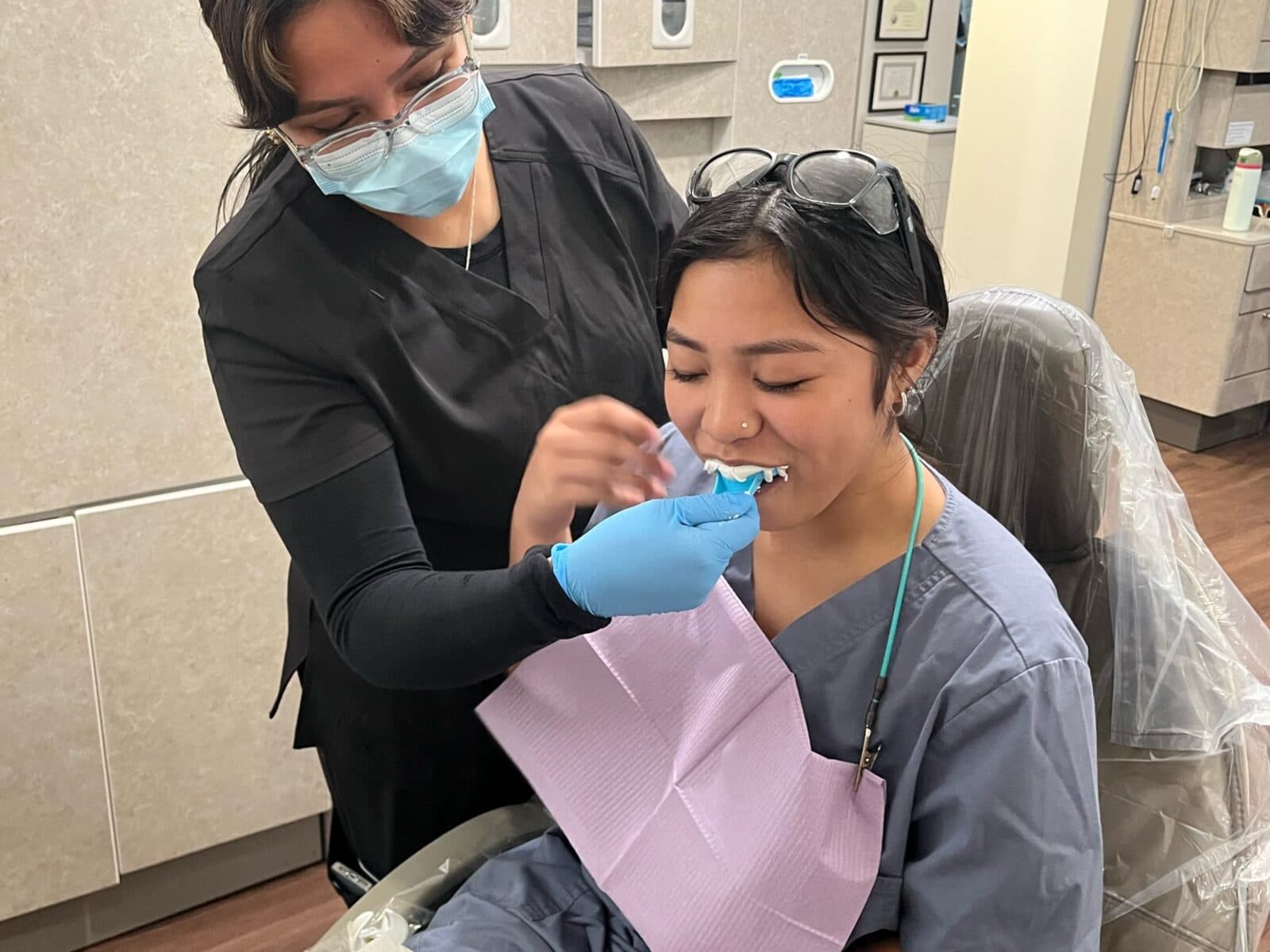
Roseville Dental Academy's 9-week Dental Assisting Program is built for this. It combines online lectures with chairside practice and a 64-hour internship, and it bundles the certificates offices look for, including Infection Control, Radiation Safety, and BLS/CPR.
Verify current requirements with the Dental Board
Dental assisting rules, required courses, and certificate timing windows can change. Always confirm the current requirements directly with the Dental Board of California before you register for a course or apply for licensure.
The Dental Board publishes the official duties, required-course lists, and RDA application steps on its website at dbc.ca.gov.
Frequently asked questions
Do you need a license to be a dental assistant in California?
No. You can work as an unlicensed dental assistant in California without a state license. However, you must complete a Dental Board approved 8-hour Infection Control course and a Dental Practice Act course, and most offices also require BLS/CPR. A license (RDA) is only required to perform additional allowable duties.
How do I start as a dental assistant with no experience?
Most people with no experience begin with a short, hands-on dental assisting training program that teaches chairside skills and includes the required certificates, then apply for entry-level roles. Roseville Dental Academy's 9-week program includes a 64-hour internship plus resume and job assistance to help you get hired.
Is dental assisting a good career in California?
Dental assisting is a stable, in-demand entry point into healthcare. Dental assistant employment is projected to grow, and California's large number of dental offices creates steady local demand. It also offers a clear path to higher pay through RDA licensure.
What is the difference between a dental assistant and an RDA?
A dental assistant (unlicensed) performs basic chairside support and can begin without a state license. A Registered Dental Assistant (RDA) is licensed by the Dental Board of California, can perform additional allowable duties, and typically earns more. Becoming an RDA requires qualifying work experience, specific course certificates, and a state exam.
Do course completion certificates expire for RDA, OA, or DSA applications?
For those applying for RDA licensure, Orthodontic Assistant (OA) permits, and Dental Sedation Assistant (DSA) permits, there are new expiration dates assigned to course completion certificates. They are as follows: • The Dental Practice Act and Infection Control course certificates must indicate the course was completed within 2 years of the application date. • Coronal Polishing, pit and fissure sealants, and ultrasonic scaling certificates must indicate the course was completed within 5 years of the application date. • Radiation Safety certificates must indicate the course was completed within 10 years of the application date. Please Note: The expiration dates listed above do not apply to unlicensed dental assistants, only those that are pursuing a license or permit.
Courses and classes to get you started
Roseville Dental Academy
Ready to start your dental assisting career?
Train hands-on in Roseville with a 9-week program that includes chairside practice, an internship, and resume and job assistance. Ask admissions about the next class date.
Keep reading
- How Long Does It Take to Become a Dental Assistant?How long it takes to become a dental assistant in California — from an accelerated 9-week program to the longer timeline for becoming a Registered Dental Assistant (RDA).
- How Much Does Dental Assisting School Cost in California?What dental assisting school really costs in California, what should be included in tuition, hidden fees to watch for, and how Roseville Dental Academy's 9-week program compares.
- RDA vs. Dental Assistant: What's the Difference in California?Understand the difference between an unlicensed dental assistant, a Registered Dental Assistant (RDA), and an RDAEF in California — duties, requirements, pay, and how to move up.
This guide is general information, not legal or licensing advice. Dental assisting requirements in California can change — always verify current rules, required courses, and timelines with the Dental Board of California.